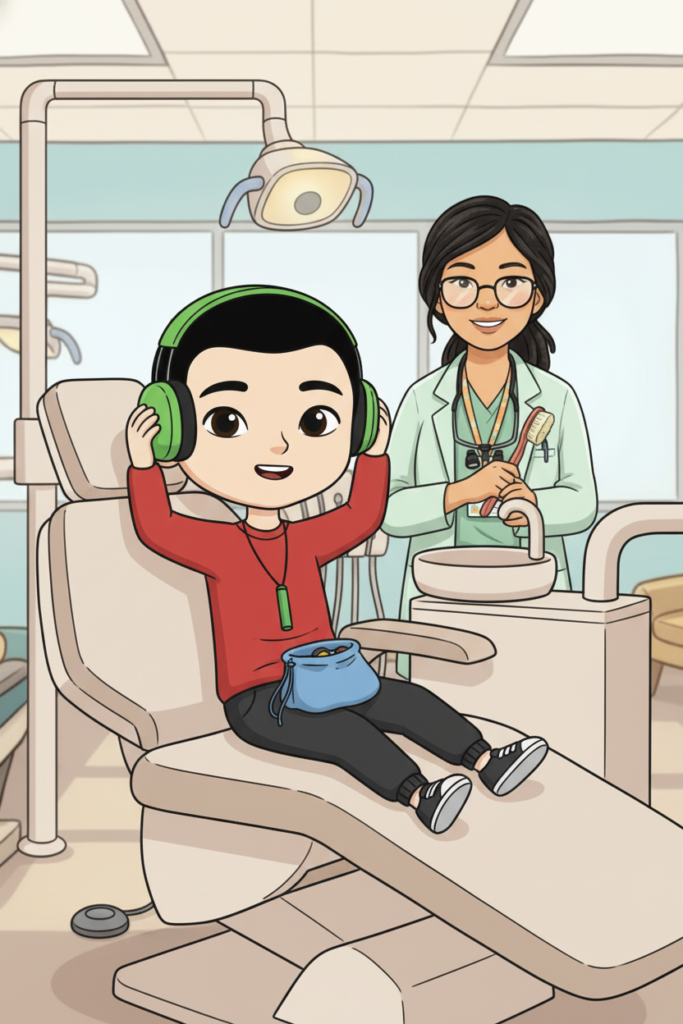
Imagine your child at the dentist, the lights too bright and the sounds too loud, their body telling them everything is too much — and instead of shutting down or melting down, they take a breath, reach for their headphones, and tell the dentist they need a minute.
That moment — that small, powerful, deeply human moment — is self-advocacy.
It doesn’t look like a speech. It doesn’t require perfect words or a calm voice or a child who never struggles. It just requires a child who knows themselves well enough to ask for what they need, and who has been given the tools to do it.
For neurodivergent kids, that is not a small thing. It is everything.
What Is Self-Advocacy?
Self-advocacy is the ability to understand your own needs and communicate them — to speak up for yourself, ask for help, set boundaries, and navigate the world in a way that honors who you are.
It’s not just saying “I need help.” It’s knowing what kind of help you need, when you need it, and how to ask for it in a way that feels true to you.
For neurodivergent children, self-advocacy is a life skill — one that doesn’t develop automatically, but can absolutely be taught, practiced, and celebrated at every age.
Why Self-Advocacy Is Different for Neurodivergent Kids
Most children learn informal self-advocacy through trial and error — they push back, ask for things, test limits. But for many neurodivergent kids, this process looks very different.
Masking — the exhausting practice of hiding or suppressing neurodivergent traits to fit in — can mean a child learns to suppress their needs rather than express them. By the time they get home, they have nothing left.
Sensory and emotional overwhelm can make it hard to access language or communicate clearly in the moments when it matters most. When the nervous system is flooded, “just ask for help” isn’t a realistic strategy.
Communication differences mean that not every child can or will self-advocate through spoken words — and that’s not a deficit. It’s a difference. Self-advocacy looks different for every child.
Executive function challenges can make it hard for a child to identify what they’re feeling, understand what they need, or remember the strategies they’ve practiced once they’re in a difficult moment.
This is why self-advocacy for neurodivergent kids isn’t about telling a child to “speak up more.” It’s about giving them a whole toolkit — language, strategies, and the deep knowledge that their needs are valid and worth advocating for.
The 8 Categories of Self-Advocacy Skills
At NeuroKindKids, we’ve organized self-advocacy into eight categories — each one a different dimension of knowing yourself and showing up for yourself in the world. Together they form a full picture of what it looks like for a neurodivergent child to truly thrive.
1. Understanding and Communicating My Feelings & Triggers
Before a child can ask for what they need, they need to know two things — what they’re feeling, and what’s causing it. For many neurodivergent kids, neither comes easily. Emotions feel big and unnamed. Triggers can be hard to identify or explain.
This category builds both skills together. Practicing “I feel…, because…” sentences. Learning to pinpoint what’s making a moment hard. Knowing that loud places are difficult, or that transitions need a warning — and being able to share that with the people who need to know.
In practice: A child who says “I feel scared because I don’t know what’s going to happen next” is advocating for themselves. A child who tells their teacher “fire drills are really hard for my ears — can I wear my headphones?” has changed their school experience entirely. Both start with knowing yourself.
2. Taking Charge of My Environment
Neurodivergent kids often experience their environments more intensely than neurotypical kids do. Lights, sounds, textures, smells — the world can feel like it has the volume turned all the way up.
Taking charge of the environment means a child learns they have agency. They can ask for the lights to be dimmed, request a quieter space, put on sunglasses outside, or step away from overwhelming situations. The environment can work for them — not against them.
In practice: A child who reaches for their noise-canceling headphones in a loud restaurant isn’t being difficult. They’re taking care of themselves.
3. Honoring My Boundaries and Autonomy
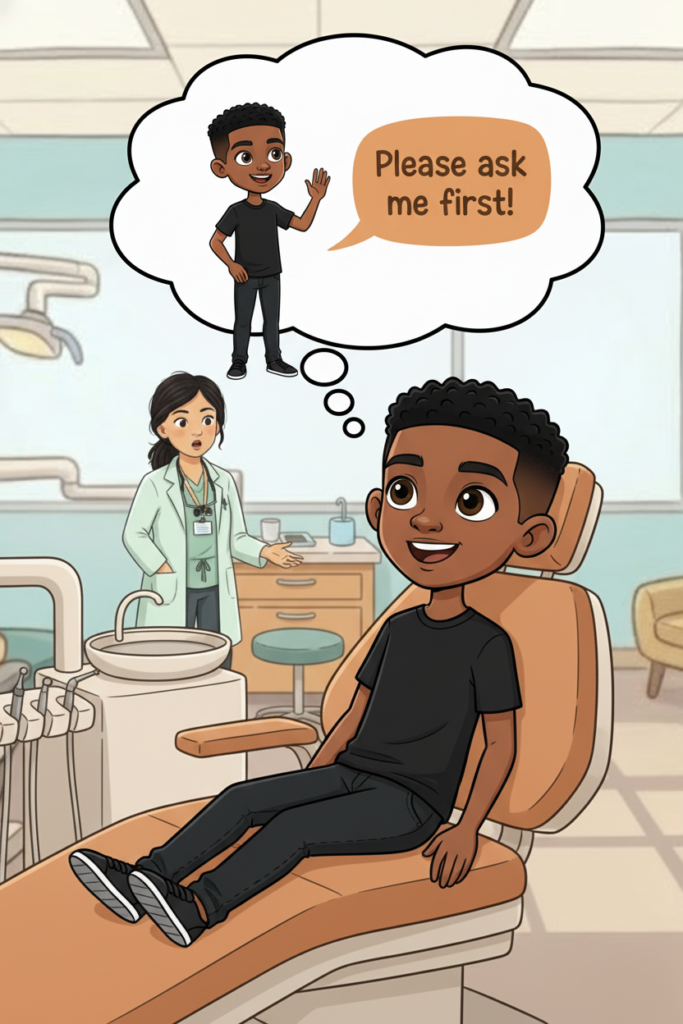
Every child has the right to their own body, their own space, and their own pace. For neurodivergent kids who are often asked to push through discomfort or comply with demands that feel overwhelming, understanding and expressing their own limits is deeply important.
This category includes everything from setting personal space boundaries with peers, to asking for more time before a transition, to sharing how full their social battery is getting.
In practice: A child who says “I need a minute before we go in” isn’t being difficult. They’re regulating themselves before a challenge — which is exactly the right thing to do.
4. Asking for Help
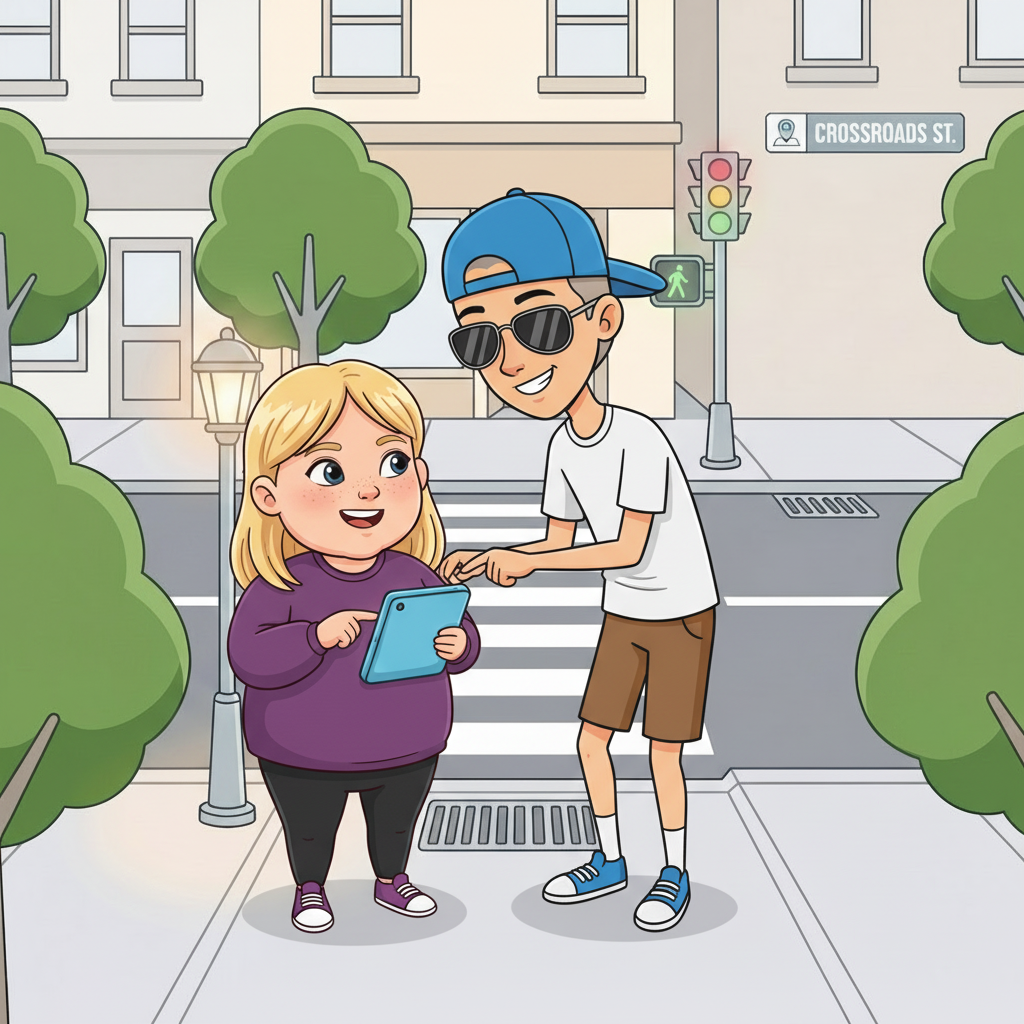
Asking for help requires vulnerability — and for many neurodivergent kids who have learned that their needs are “too much,” it can feel impossible.
This category is about rebuilding that trust. It includes asking for co-regulation from a trusted adult, requesting more processing time, asking for a task to be explained a different way, or letting someone know when things feel unmanageable.
In practice: A child who can look at a trusted adult and say “I need help right now” has done something extraordinary. That skill will serve them for life.
5. Practicing Self-Regulation Strategies
Self-regulation isn’t about controlling emotions — it’s about having tools to help the nervous system find its way back to calm. For neurodivergent kids, having a personal toolkit of regulation strategies is one of the most powerful things they can develop.
This category includes movement strategies, deep pressure, breathing techniques, stim breaks, brain resets with a favorite activity or special interest, and sensory tools like chew necklaces or weighted blankets.
In practice: A child who knows “when I feel this way, rocking helps” or “humming helps me get through hard things” has a superpower — even if the world doesn’t always recognize it yet.
6. Safety Awareness and Partnership
Neurodivergent children sometimes navigate safety differently — they may need more support understanding why certain rules exist, or more time to build the trust required to follow them. This category meets them there.
It includes understanding why safety rules matter, requesting a trusted adult for help with safety challenges, and co-designing safety plans with the grown-ups in their life. It treats safety as a partnership, not a demand.
In practice: When a child helps create a plan for a challenging situation rather than just being handed rules to follow, they feel ownership over it. That ownership matters.
7. Executive Function Skills
Executive function — planning, organizing, starting tasks, managing time, pivoting when things don’t go to plan — is an area of genuine challenge for many neurodivergent kids. But these are skills that can absolutely be supported and developed.
This category includes tools like timers, visual schedules, breaking big tasks into smaller pieces, making lists, choosing priorities, and learning to pivot gracefully when plans change.
In practice: A child who can look at a big overwhelming task and say “okay, what’s the first small step?” has a skill that will carry them through school, work, and life.
8. Loving Everything That Makes Me, Me
This last category might be the most important of all.
This category is the heart of everything. A child who loves who they are — their unique brain, their unique way of moving through the world — has a foundation that no challenge can take away.
This category is about celebrating a child’s unique strengths, feeling proud of their differences, being kind to themselves when things are hard, and knowing that who they are — all of it — is worth advocating for.
In practice: A child who says “I’m different and that’s actually kind of amazing” is not just surviving in the world. They are living in it fully, and proudly.
How to Practice Self-Advocacy Skills at Home
You don’t need a therapy session or a curriculum to start building these skills. Here are a few ways to weave self-advocacy into everyday moments:
Name feelings out loud — yours too. When you say “I’m feeling frustrated right now, so I’m going to take a breath,” you’re modeling exactly what you want your child to learn.
Celebrate the ask. When your child asks for what they need — in any form, in any words — make a big deal of it. “I’m so glad you told me that. That was really brave.”
Practice in calm moments. Don’t wait for a hard situation to introduce a strategy. Try breathing techniques when everyone is relaxed. Practice the words for asking for help before they’re needed.
Follow their lead. Ask your child what helps them. What makes hard things easier? What do they wish people knew about them? Their answers will surprise and guide you.
The Role of Stories in Building Self-Advocacy
One of the most powerful ways children learn is through story. When a child sees a character who looks like them, uses the same tools they use, and faces the same kinds of challenges they face — and watches that character find their way through — something shifts.
They don’t just watch it happen. They imagine themselves experiencing it too.
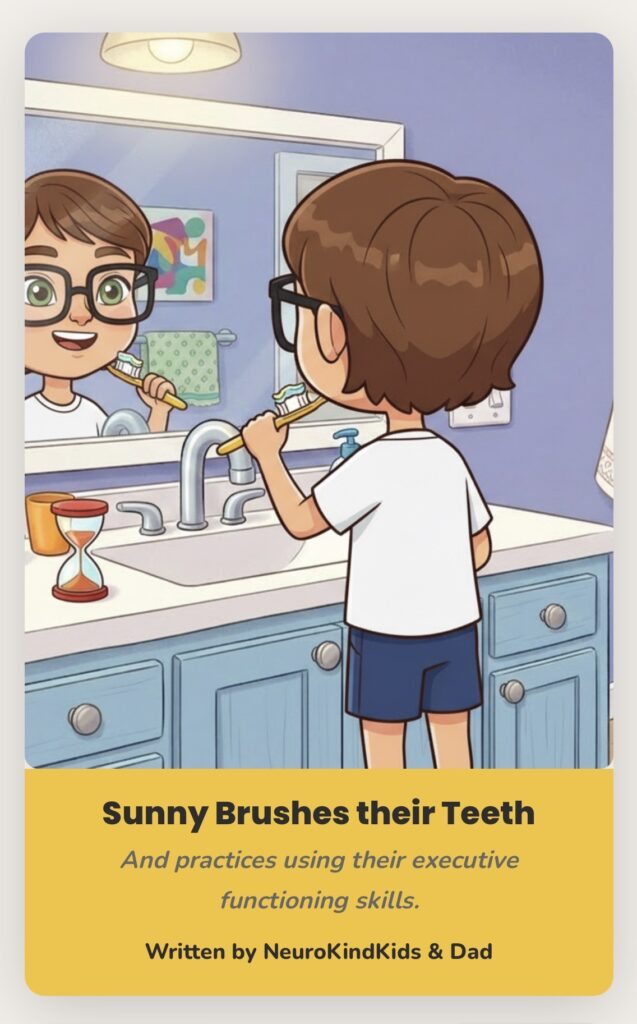
That’s the heart of Kind Kid Books. Each book is a personalized story where your child is the hero — navigating a real challenge and using a real self-advocacy to get through it successfully. It’s not just a book. It’s practice. It’s rehearsal. It’s a child seeing themselves as capable before they’ve had to prove it to anyone.
Because the more times a neurodivergent child sees themselves succeeding — in stories, in real life, in the eyes of the people who love them — the more deeply they believe they can.
A Note to Every Caregiver Reading This
If you are raising a neurodivergent child, you are already advocating for them every single day — in doctors’ offices, in school meetings, in moments no one else sees.
The goal of self-advocacy is not to replace that. It’s to give your child the tools to one day do it for themselves — to know their own needs, trust their own voice, and move through the world with the quiet confidence of someone who knows exactly who they are.
That’s what every neurodivergent kid deserves. And it starts here.
Ready to see self-advocacy in action? Make your kid’s first Kind Kid Book — free.